
My take on AI as a tool for photographers.

I’ve been working as a photographer for nearly 50 years. I was introduced to photography in the 1960s by my dad, earned an associate’s degree in photography in 1981, and I’ve been in the field ever since.

I started out shooting film—both black and white and color—often at the direction of whichever editor I was working for. Over the years I’ve adapted, sometimes enthusiastically, sometimes grudgingly, to whatever new technology came along.
I loved long lenses (and still do for wildlife and action work), motor drives, and faster film stocks—the faster the better. I welcomed finer-grained, more accurate emulsions. I leaned a little too heavily on auto-exposure early on, but I was a late convert to autofocus. For a long time, I was convinced I could focus better than the camera.
Back then, motor drives were the key to capturing peak action—today’s high-speed continuous shooting owes a lot to those early tools.
When digital photography became the norm, I wasn’t immediately thrilled. I had always liked holding something physical in my hands—a negative or a slide—something with real-world presence that I had created.
But I came around. Digital made my work faster, cleaner, and more efficient—without covering my clothes in chemicals or wondering what I was doing to my lungs.
Editing and delivering images electronically became an art in itself, and one I learned to do well.
Like a lot of photographers, I’ve held onto just about everything I’ve ever shot—good, bad, or otherwise. I’ve got pages of images that many people would have thrown away years ago.

And that brings me to AI.
I’ve always been interested in AI as a tool for photographers to salvage or reimagine those imperfect images—frames that were poorly exposed, soft, or just didn’t quite work at the time. Now, with AI tools, there are new ways to revisit that work.
I love photography. I’ve made a living at it for decades. And I’ve learned one thing for sure: the future is coming whether we like it or not.
I’ve never been overly concerned about images being “stolen” online—people who are going to steal will do it, and people who value the work will pay for it. I don’t complain when a client uses a phone photo for speed instead of waiting for one of mine. That’s just reality.
So as someone who still loves the craft, I’m once again experimenting with new technology.
Let me be clear about one thing.
My editorial work remains exactly that—an accurate representation of what happened in front of my camera. AI-enhanced images do not belong in documentary or editorial work, and they should always be clearly labeled when used.
Using AI to create something artificial and passing it off as real is irresponsible. That line matters.
That said, there are areas where I think AI can be a valuable tool for photographers creating visual art.
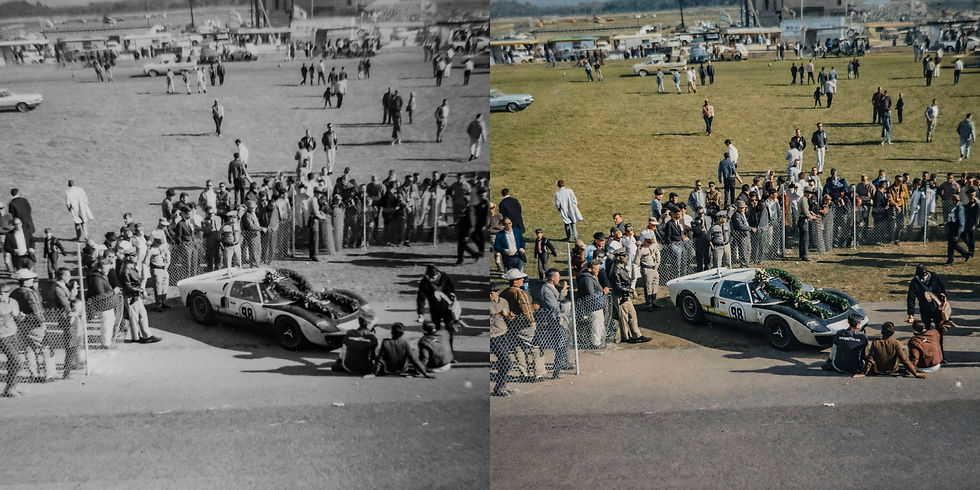
1) Colorizing black and white images
There was a time when color photography wasn’t available—or when an assignment required black and white. I’ve found that AI can produce some beautiful results when asked to colorize those images, especially when starting from a well-exposed negative.
And honestly, I sometimes wonder—how different is that from taking a color image today and converting it to black and white?
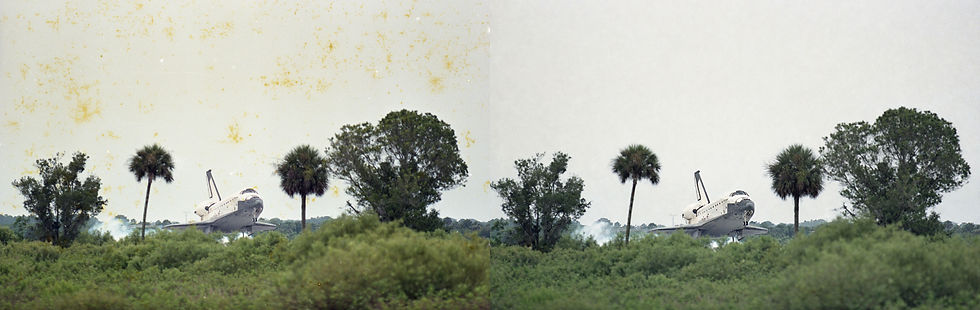
2) Restoring and improving old film images
Anyone who shot film on deadline knows that processing in the field wasn’t always perfect. Negatives could come back with poor density, heavy grain, or strange color shifts that were difficult—or impossible—to fix at the time.
AI has become a powerful tool for restoring and improving old film images, especially when working from properly scanned negatives or slides. I include repairing age-related damage—scratches, stains, creases—in that same category.
Of course, those images should be identified as having been digitally restored.
For those of us who still have boxes of old work sitting around, even revisiting faster film stocks from back in the day—or scanning them with modern tools—can open up entirely new possibilities.

3) Photo research
This one surprised me.
Like most photographers, I tried to label and archive my work carefully. But every now and then there’s a roll of film where, years later, the details are unclear.
I recently used AI to identify an unlabeled roll from the 1990s. By analyzing the shuttle name, landing direction, sun angle, spacecraft configuration, and background details, it correctly identified the images as the landing of Space Shuttle Discovery at the end of the STS-70 mission in 1995.
That’s pretty remarkable.
At the end of the day, my editorial archive remains exactly that—a record of real moments as they happened.
But when it comes to creative work, I’m going to keep experimenting.
Sometimes it works. Sometimes it doesn’t.
But that’s nothing new. Photographers have always pushed the limits of their tools—whether it was film, darkroom techniques, digital editing, or now AI.
And sometimes, you miss the mark.
That’s part of the process. It always has been.
Photo Stories at BCPIX.com
Original photography and firsthand visual history by Brian Cleary.
All images © Brian Cleary. Editorial licensing available.
Some posts may include sponsored or affiliate links.


Thoughtful take on AI as a practical tool rather than a replacement for photographers. I like the point that technology works best when it supports creativity and workflow. For photographers who keep handwritten shot notes or planning sketches, handwritten image to text can also be useful for organizing those ideas later.
I work at a senior care facility. The large print word search has been a hit — big fonts, high contrast, residents can actually read the letters.